Epoxy Floors Built for Crystal Lake Garages, Basements and Shops

Every slab is ground open, moisture tested and quoted per square foot before a drop of resin is mixed.

Crystal Lake Epoxy Flooring has spent more than 20 years putting down epoxy, polyaspartic and polished concrete floors in Crystal Lake, IL, from two-car garages and damp basements to machine shops, storefronts and commercial kitchens. We grind every slab open, test it for moisture, and quote the system by the square foot before any resin is mixed.

Most failed floor coatings fail for the same few reasons: the concrete was never opened up, moisture was never measured, or the coating went down on a slab too cold to cure. Our process is built around those three. The written proposal names the product, the system build and the finished thickness, so you can check what was quoted against what went down.

We will also tell you when a floor should not be coated yet. A slab with active water, structural cracking or a failing old coating needs repair first, and an unheated garage in January needs to wait for spring. Saying that before the job is sold costs us some work and saves our customers from floors that peel.

Get Your Free Quote

Fast response • No obligation

So we can reach you about your request.

So we can send you a confirmation after you submit this inquiry form.

  • 20+ Years on Local Concrete
  • Moisture Testing in Every Scope
  • Written Per-Square-Foot Quotes

What we do

Our Services

Epoxy and Polished Concrete Floors in Crystal Lake, IL

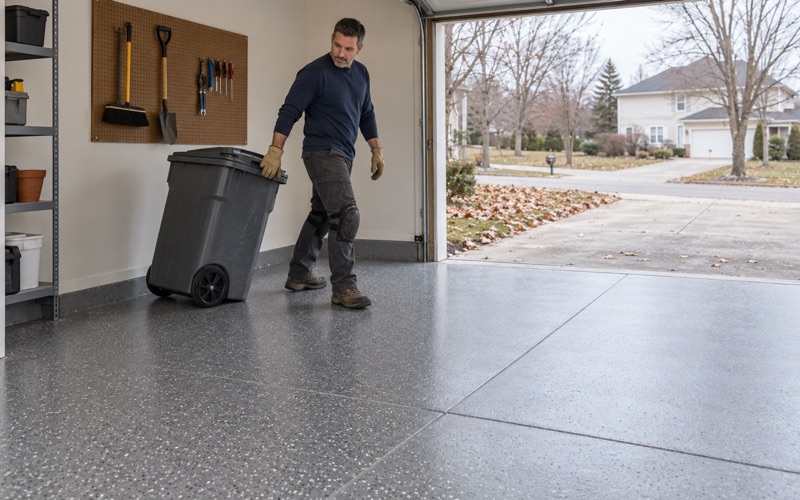
A wheeled trash bin walked back into a Crystal Lake garage over a solid charcoal epoxy floor with light flake.

Epoxy Garage Floor

Ground, moisture-tested garage slabs finished with a full flake broadcast and a topcoat built to stand up to winter brine and hot tires.

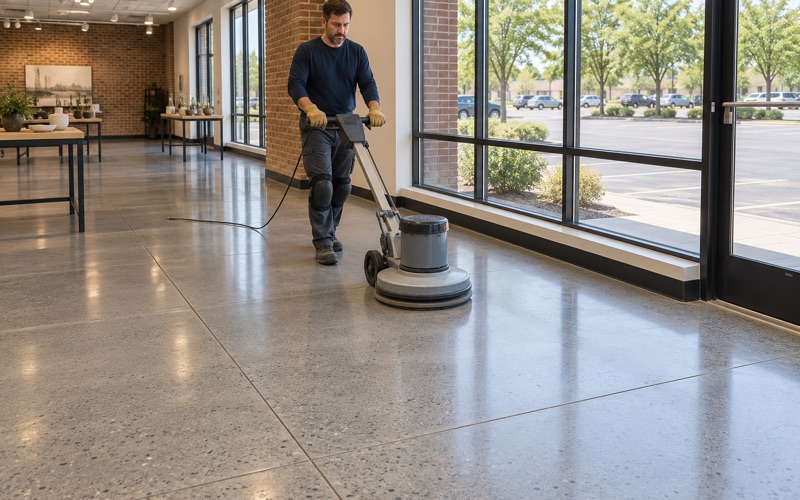
A burnisher run across a polished gray concrete floor in a Crystal Lake showroom with a soft reflected sheen.

Polished Concrete Floors

Concrete ground through progressively finer diamonds, densified with lithium silicate and polished to a durable, low-maintenance shine.

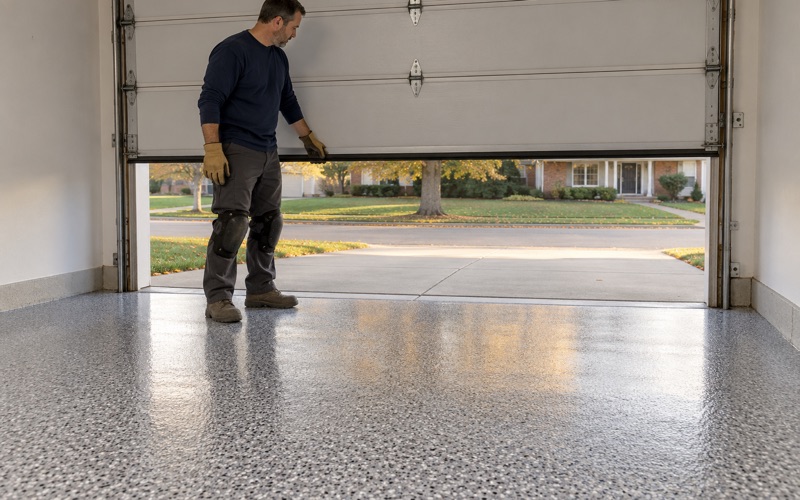
An overhead door lowered onto a same-day polyaspartic flake floor in a Crystal Lake garage at the end of the install.

Polyaspartic Floor Coating

Fast-curing, UV-stable polyaspartic coatings for garages, basements and commercial floors, installed over diamond-ground, moisture-tested concrete.

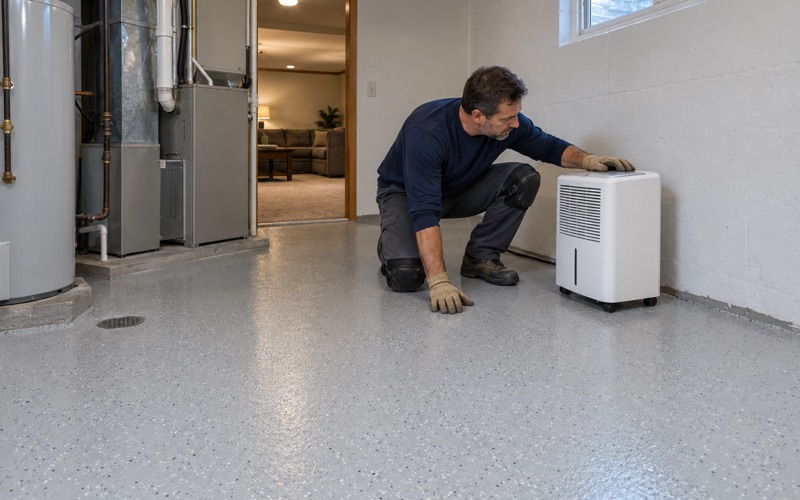
A dehumidifier rolled back into place on a new light gray epoxy basement floor in a Crystal Lake home.

Basement Floor Epoxy

Basement floor coatings that begin with moisture testing, detail around sump pits and drains, and never pretend a coating is waterproofing.

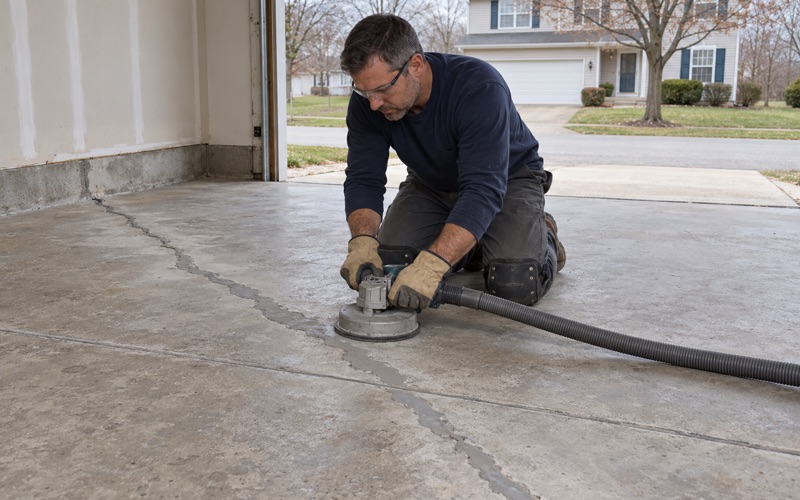
A repaired crack ground flush across a bare garage slab in Crystal Lake before any coating goes down.

Concrete Floor Repair

Crack, spall, joint and surface repair for garage, basement and commercial slabs, with a straight answer when a floor needs replacing instead.

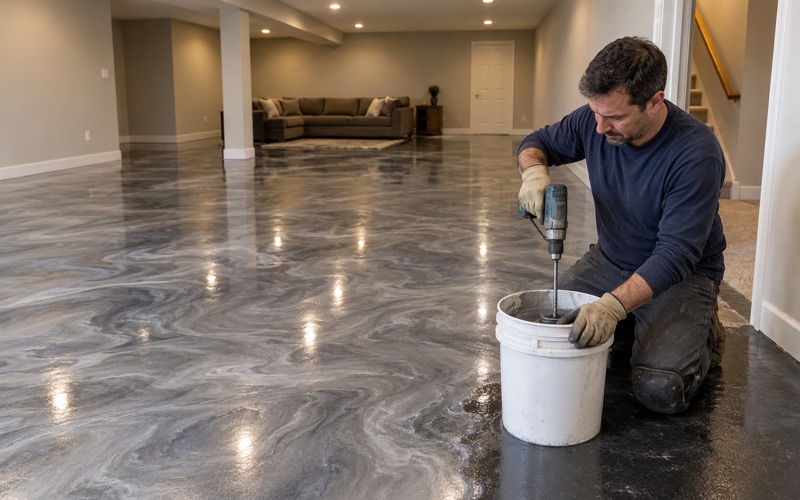
Metallic epoxy mixed in a bucket beside a fresh silver and charcoal pour on a Crystal Lake basement floor.

Metallic Epoxy Floor

Marbled metallic epoxy floors for finished basements, showrooms, offices and bars, poured over a flat, ground and moisture-tested slab.

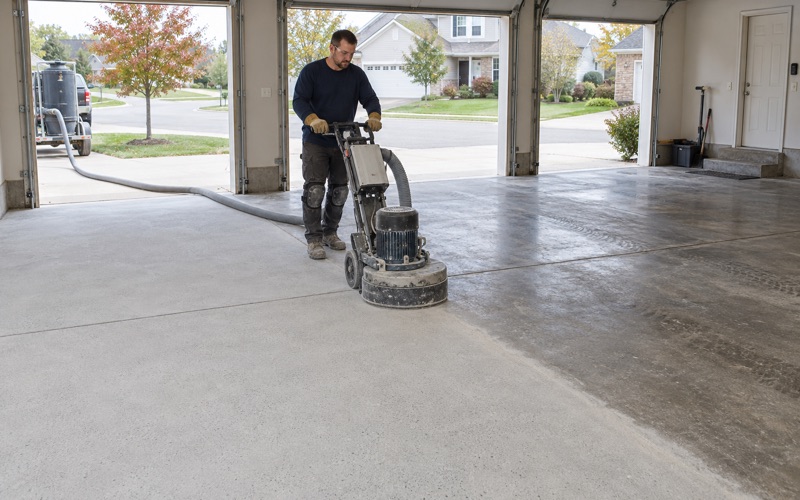
A walk-behind grinder opening up a Crystal Lake garage slab, the ground half pale and the rest still sealed.

Concrete Grinding

Diamond grinding and shot blasting that remove coatings, glue and weak concrete and leave a measured profile ready for a coating or polish.

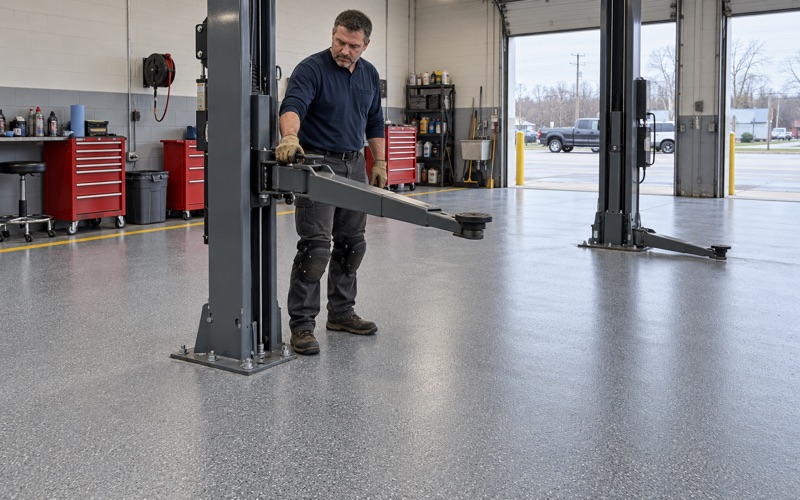
A lift arm swung under a coated service bay floor in a Crystal Lake auto repair shop.

Commercial Epoxy Flooring

Epoxy, quartz and urethane systems for shops, offices, showrooms and plants, specified for the load and scheduled around business hours.

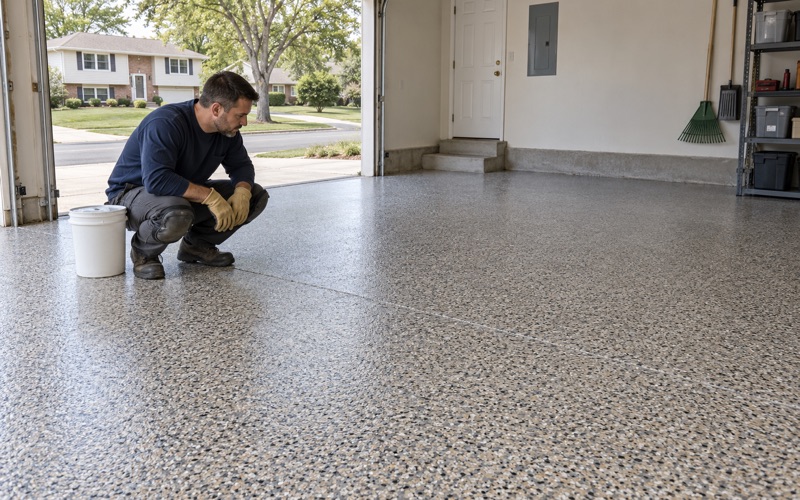
A finisher crouching to inspect a dense gray, tan and black flake floor in a Crystal Lake garage.

Flake Epoxy Floor

Full-broadcast vinyl flake floors in dozens of blends, built over a ground slab and sealed with a clear, durable topcoat.

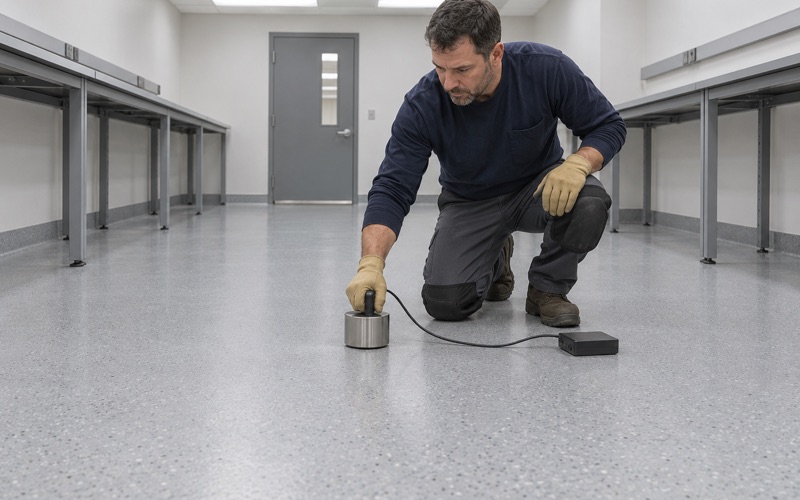
A resistance test electrode set on a gray static-control floor in a Crystal Lake electronics assembly room.

Esd Flooring

Static-dissipative and conductive epoxy floors for electronics, labs and server rooms, grounded and tested before handover.

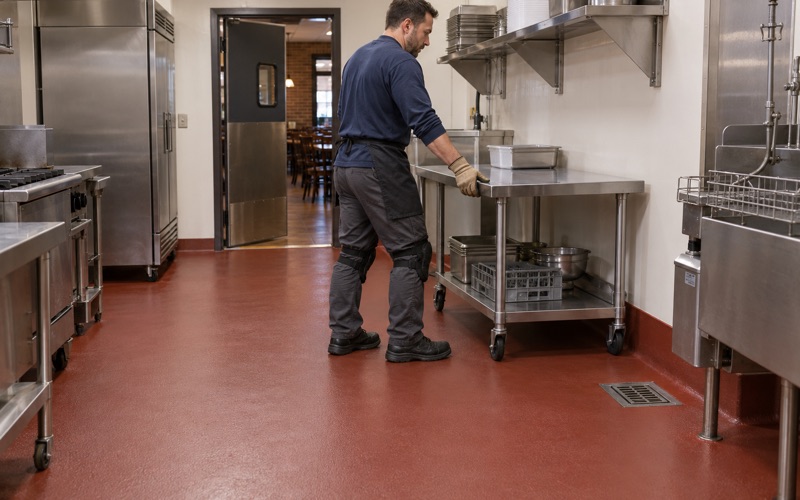
A stainless prep table rolled back onto a coved urethane cement floor in a Crystal Lake restaurant kitchen.

Commercial Kitchen Flooring

Seamless urethane cement kitchen floors with coved bases and slip-resistant texture, specified for health department plan review.

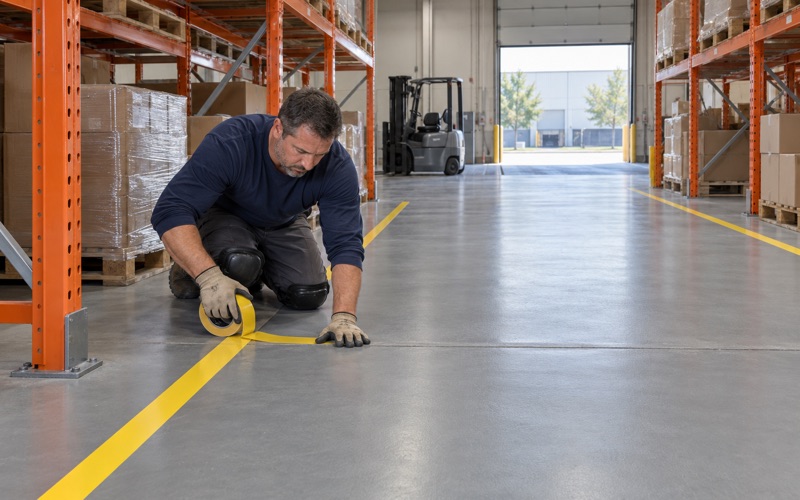
Aisle striping laid out on a new gray epoxy warehouse floor in a Crystal Lake industrial park.

Industrial Epoxy Flooring

Heavy-duty epoxy, epoxy mortar and chemical-resistant systems for plants, warehouses and loading areas, installed around production schedules.

Two Decades on Crystal Lake Concrete

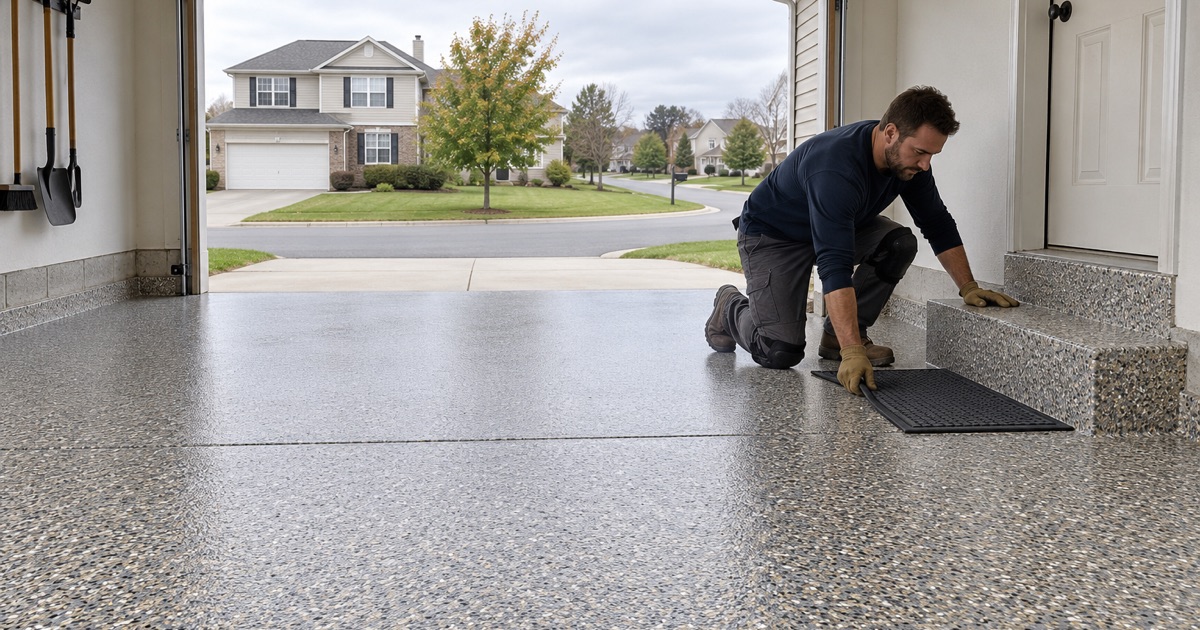
A rubber entry mat laid at the house step on a new gray and tan flake floor in an attached Crystal Lake garage.

20+ Years in Business

We have been grinding, priming and coating concrete for more than 20 years. That time has taught us what a McHenry County slab looks like after its first salt season, which old coatings come off cleanly and which fight the grinder, and why the floors that last are the ones where nobody skipped the preparation.

Why Choose Crystal Lake Epoxy Flooring

Mechanical Surface Profile

Every slab is opened with a diamond grinder or shot blaster to a measured ICRI concrete surface profile, so the primer bites into sound concrete rather than sitting on laitance, sealer or old paint. We never acid etch, because acid leaves residue and an uneven profile that a careless installer only discovers when the floor starts lifting.

Moisture Testing in the Scope

No slab gets coated on a guess. Moisture testing is written into the scope for garages, basements and shops alike, so a slab sitting on Crystal Lake’s sand and gravel near a high water table is caught before it blisters a new floor, rather than diagnosed after the coating has already failed.

Garage Systems for Salt Season

Our garage systems are built for the calcium chloride brine and rock salt that a McHenry County winter tracks in on the tires, so the broadcast and topcoat hold up to months of wet, salty slush rather than wearing through at the tire paths by March the way thin single-coat kits do.

Cured to the Slab, Not the Calendar

The Crystal Lake 4NW weather station records 135.6 nights a year at or below 32 degrees on average. Curing is scheduled against slab temperature and the dew point spread at the surface, and we say plainly when an unheated garage has to wait for spring, rather than coating a cold slab and leaving amine blush and a soft film behind.

Illinois Paperwork Before the Work

Never does a home job start without a written contract and the state’s consumer-rights pamphlet in hand, as the Illinois Home Repair and Remodeling Act requires. Illinois has no state flooring license, so we check each city’s or village’s own registration, bond and insurance rules before scheduling, rather than learning about them from a stop-work notice.

The Garage Floor, Start to Finish

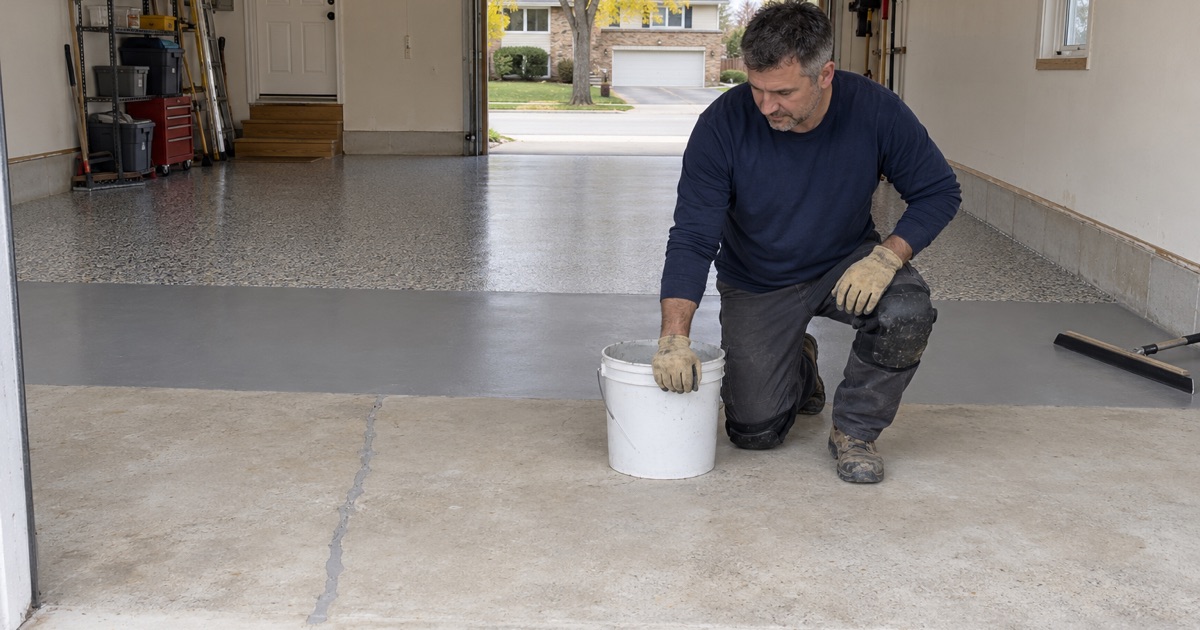
A Crystal Lake garage floor in three stages at once: ground bare, gray base coat, and finished flake.

What an Epoxy Garage Floor Job Involves

An epoxy garage floor job starts with a walk of the slab: cracks, joints, old coatings, drains and where water runs when the door is open. Then come grinding, repairs, moisture testing, a primer, a body coat with flake or color, and a clear topcoat. The proposal states when you can walk on it and when the car can come back in.

Diamond Grinding Before Any Coating

Concrete that has been sealed, painted or troweled glass-smooth will not hold a coating. A diamond grinder removes the weak top layer and opens the pores, and the dust is collected at the grinder rather than swept toward a floor drain. A coating rolled over sealer or paint bonds only to that film, and when the film lets go, the floor goes with it.

Moisture Testing a Garage Slab

Garage slabs are often poured with no vapor retarder underneath, because the garage exception in IRC R506.2.3 allows it. That means ground moisture can rise into a coating from below. We screen with an ASTM D4263 plastic sheet test and use ASTM F1869 calcium chloride or ASTM F2170 relative humidity testing where the numbers matter, before choosing a primer.

Reading the Cracks in Your Garage Floor

Hairline shrinkage cracks, open control joints, settled sections and heaved edges all mean different things. We fill stable cracks with a semi-rigid polyurea filler, keep working joints as joints, and say plainly when a section is still moving. A coating laid over a moving crack will crack along the same line within a season.

Coating Versus Replacing a Garage Slab

Some slabs are past coating, with deep spalling, heaved sections or a floor broken into pieces, and we say so and point you to replacement first. Replacement work inside the city runs through the Crystal Lake Building Division and its ezAPP permit portal, under the 2018 IRC as adopted in City Code Chapter 422. Whether a particular job needs a permit is the Division’s call, not ours.

Calcium Chloride Brine and Rock Salt

Deicing brine and rock salt ride into the garage on every winter drive and pool wherever the snow melts off the car. On bare concrete, repeated salt and freeze-thaw cycles scale the surface and pop out aggregate. A sealed, broadcast coating keeps that brine on top, where a squeegee and a rinse can push it out the door.

Coating a Garage in a McHenry County Winter

Resins need warmth to cure, and the slab matters more than the air above it. We measure slab temperature and the dew point spread before mixing anything, because a coating applied too cold or too close to dew point can blush or stay soft. An unheated garage in January usually has to wait, and we tell you that when we quote.

Epoxy Garage Floor Kits Versus a Professional System

Store kits are typically a thin water-based epoxy over an acid-etched slab, and hot tire pickup is the most common complaint that follows. A professional system uses mechanical grinding, a 100% solids epoxy or polyaspartic base, a full flake broadcast and a durable topcoat at a stated thickness. The difference shows in the second winter, not the first week.

What an Epoxy Garage Floor Costs per Square Foot

We quote per square foot for the system actually proposed, not from a national per-garage figure. The number moves with the condition of the slab, how much crack repair and coating removal is needed, whether a moisture-mitigation primer is required, and the flake and topcoat build. The proposal breaks those out so you can see where the money goes.

What a Coating Warranty Usually Excludes

Every coating warranty has exclusions, and moisture is almost always first, since vapor drive or water pressure from below falls outside nearly every manufacturer’s coverage. Impact damage and chemicals left standing are common exclusions too. We read the exclusions out before the job is sold, not after a problem shows up.

Polyaspartic Versus Epoxy Topcoats

Polyaspartic coatings cure fast, stay clear in sunlight and resist abrasion, which is why they are often sold as ‘stronger than epoxy.’ What that claim leaves out is that a fast-curing coating has less time to wet into the concrete, so preparation matters even more. Many of our garage systems pair an epoxy base for bond and build with a polyaspartic or polyurea topcoat for wear.

Basements, Sump Pits and Groundwater

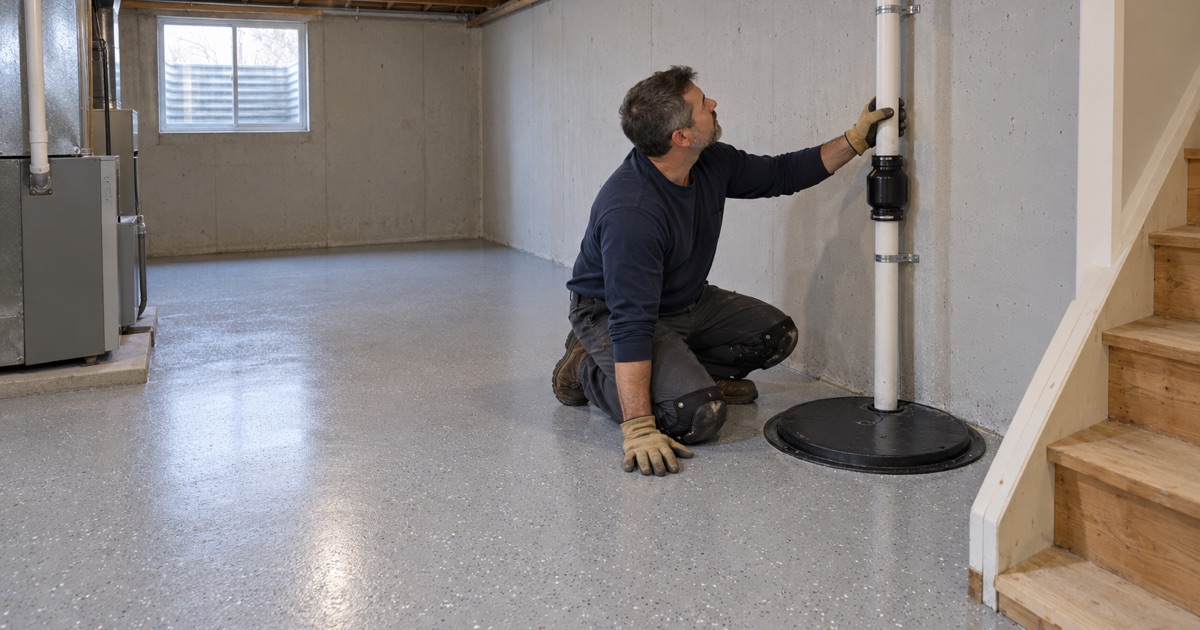
A sump basin in the coated gray basement floor of a Crystal Lake house, its discharge pipe checked above the valve.

Basement Floor Epoxy Starts With Moisture

Before talking color, we look at where water reaches your basement: walls, cracks, the sump, floor drains or straight up through the slab. A coating is not waterproofing, and a basement with active seepage needs that fixed first. Once the slab tests dry enough, a coating gives a brighter floor that wipes clean.

Hydrostatic Pressure Under a Basement Slab

When groundwater rises around a basement, it pushes up against the underside of the slab. That pressure can drive water through cracks and pores, and it will lift a coating from below no matter how well it was applied. We look for the signs: damp patches after rain, rings around the sump and staining along cracks.

Efflorescence on a Basement Floor

Efflorescence is the white, chalky powder left when water moves through concrete and drops its mineral salts at the surface. It signals moisture movement, not just a stain. We grind it off, test the slab, and if moisture is still moving, recommend a mitigation primer before any sealed film goes down.

Coating Around Sump Pits and Floor Drains

Sump pits, drain tile connections and floor drains have to keep working and stay reachable after a floor is coated. We detail the coating to the pit and drain rims, keep lids removable, and never bury a cleanout. A floor that looks good but sends water the wrong way makes for a worse basement.

Moisture-Mitigation Primers

When testing shows vapor emission or relative humidity above what a standard primer tolerates, a moisture-mitigation primer is the next step. These high-solids epoxy primers are designed to hold back vapor drive from below, within limits the manufacturer states against ASTM F710-style thresholds. They add cost, so we specify one only where the readings call for it.

Basement Floors After the July 2017 Storms

Shaw Local reported that 275 basements in McHenry County took on water in the July 2017 flooding, mainly in Crystal Lake and Lakewood. A slab that has taken water needs cleanup, time to dry and a moisture test before any coating. We treat a floor coating as the last step after the water is dealt with, never as protection from the next storm.

Slabs on Sand, Gravel and a Shallow Water Table

Crystal Lake sits on outwash sand and gravel, and the lake is fed by groundwater from its north shore, with its level swinging by up to 4 feet. The city drains the water table north of the lake with tile and retention ponds. Homes near the lake and near Crystal Creek and Woods Creek can sit closer to groundwater, which is why we never skip the moisture test here.

FEMA Flood Damage-Resistant Floor Finishes

FEMA Technical Bulletin 2 ranks flooring materials by how well they survive floodwater, and concrete with a sealed or formed-in-place finish rates far better than carpet or most wood products. That makes a coated slab a sensible basement finish where water is a risk. It still does not keep water out; it only cleans up better afterward.

Coated Laundry Rooms, Workshops and Home Gyms

A coated basement slab suits the rooms that see water, weight and wear. Laundry areas get a finish that wipes clean, workshops get a surface that shrugs off dropped tools and oil, and home gyms get a floor that takes mats and equipment. We add texture near washers and sinks, since a bare glossy finish is slippery when wet.

What a Basement Floor Coating Costs

Basements are quoted per square foot like garages, but the moving parts differ. Moisture results decide whether a mitigation primer is needed, old carpet adhesive or tile mastic may have to be ground off, and carrying equipment through a house changes the labor. We price the system the test results call for, not the cheapest one that might fail.

Radon and Basement Floor Coatings

Radon is a soil gas that enters through cracks and gaps in a slab, and some sellers suggest a coating will reduce it. We do not sell a floor coating as radon reduction. In Illinois, radon mitigation takes a license from IEMA, so a homeowner concerned about radon should test first and then hire a licensed mitigator.

Color, Flake and Finish

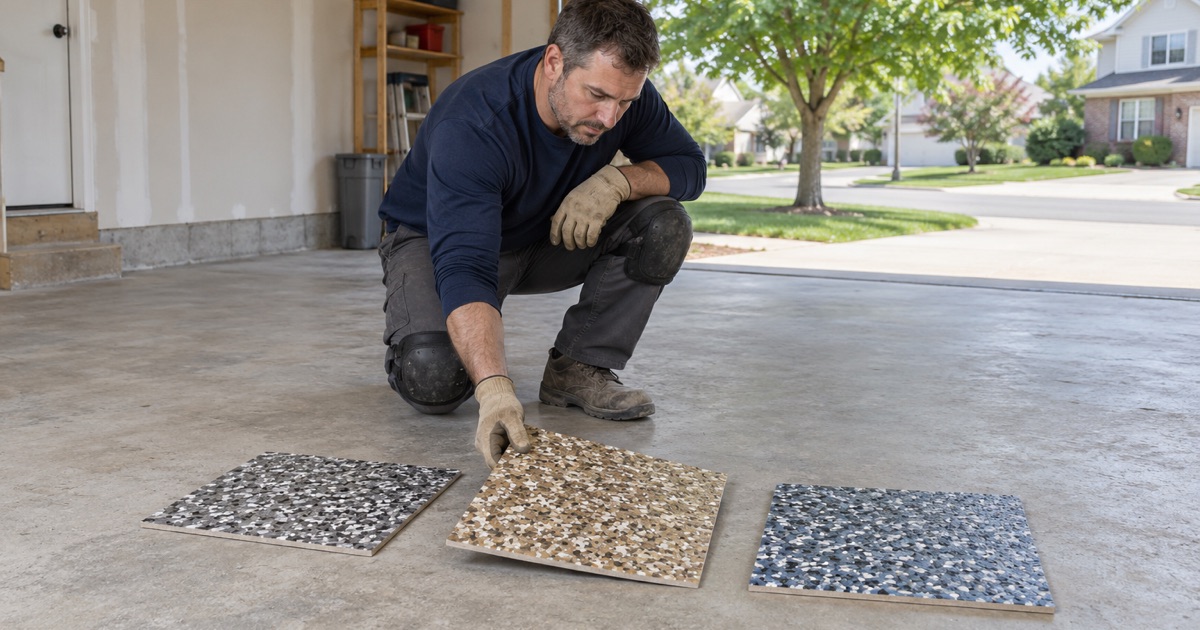
Three flake sample boards laid on a ground garage slab in Crystal Lake so a homeowner can compare blends in daylight.

Vinyl Flake Blends and Chip Sizes

Vinyl flake floors broadcast colored chips into the wet base coat, and the blend and chip size decide how the floor reads. Larger chips show as distinct speckles, while smaller ones blend into a granite look from standing height. A full broadcast also hides minor slab blemishes and adds grip underfoot.

Metallic Epoxy Floors

Metallic epoxy uses pigments that drift and swirl as the coating is worked, leaving a marbled, three-dimensional finish no two floors share. It needs a flat, well-prepared slab, a crew working one continuous pour and steady temperatures. It suits basements, showrooms and offices better than salty garages, where a broadcast floor wears better.

Polished Concrete and Aggregate Exposure

Polished concrete is the slab itself, ground through progressively finer diamonds and hardened with a lithium silicate densifier. Grind depth decides the look: cream with almost no stone, salt and pepper with fine aggregate, or full exposure with larger stones. We open a test area first, because an older slab’s aggregate is a surprise until it is ground.

Gloss, Satin and Matte Topcoats

High gloss reflects light and looks dramatic but shows every dust film, tire mark and scratch. Satin and matte topcoats hide wear and footprints far better, which is why many garage owners switch after living with gloss. We bring samples of each sheen on the system you are considering.

Quartz Broadcast Floors

Quartz aggregate broadcast into epoxy delivers color and slip resistance in the same layer. It is common in commercial kitchens, locker rooms and ramps, and the grit can run from fine to coarse. Heavier texture is harder to mop, so we match the grit to how the floor will be cleaned.

Solid Color Floor Coatings

A solid gray or tan coating is the simplest system, and sometimes the right one. Warehouses with painted safety lanes, mechanical rooms and utility spaces rarely need flake or metallic effects. A solid floor is easier to touch up, and safety striping reads clearly against it.

Ultraviolet Light and Ambering

Many epoxies turn yellow, or amber, in sunlight coming through an open garage door or a window. Aliphatic polyaspartic and polyurethane topcoats resist that far better. Where a floor sees sun we specify a UV-stable topcoat, so a light gray floor stays light gray.

Saw-Cut Lines, Borders and Inlaid Logos

Saw cuts, painted borders and inlaid logos turn a plain coated floor into a designed one. We can follow existing control joints as design lines, add contrasting borders around a showroom, or set a logo in a lobby. Each detail is drawn into the proposal so nothing is improvised on install day.

Shops, Warehouses, Stores and Kitchens

A loaded flatbed cart rolled across the coated stockroom floor of a Crystal Lake industrial park building.

Commercial Epoxy Flooring Versus Residential Work

Commercial floors carry more traffic, heavier loads and tighter schedules than a home garage. Systems are thicker, preparation is often shot blasting over large areas, and the work has to fit around operations. Plan review, fire inspection and health department rules may apply too, so we confirm the paperwork before mobilizing.

Plant Floors Along Route 14, Route 31 and Route 176

Manufacturing and distribution anchor the employer base around Crystal Lake, with tool, equipment and packaging plants along Route 14, Route 31 and Route 176. Some of those addresses sit in Prairie Grove or unincorporated Nunda Township despite a Crystal Lake mailing address. We confirm which building department governs the parcel before we commit to a schedule.

Control Joints and Joint Filler Under Forklifts

Control joints in a warehouse slab take a beating from forklift wheels, and an unfilled joint chips at the edges until it becomes a trench. We fill joints with a semi-rigid polyurea that supports the wheel while allowing slight slab movement. Coatings are cut at the joints so cracking follows the joint, not a random line across the floor.

Restaurant Kitchens and McHenry County Plan Review

New and extensively remodeled food kitchens go through plan review with the McHenry County Department of Health in Woodstock before the permit is issued. We specify the floor to that review: smooth, durable and easily cleanable, with slip resistance where the FDA Food Code 6-201.11 exception allows it. Settling the floor on paper first avoids redoing it at final inspection.

Coved Urethane Cement for Hot Washdown

Kitchens with hot washdowns, fryer oil and steam cleaning will cook a standard epoxy off the floor. Urethane cement handles thermal shock and wet heat far better, and we run it up the wall as a coved base so floor and wall meet without a seam, as FDA Food Code 6-201.13 calls for. The finished floor can be hosed and squeegeed without water getting under the edges.

Storefront and Tenant Space Floors

Retail and office spaces often turn over on a tight schedule between leases. We grind out old adhesive and coatings, repair the slab and install a fast-curing system so the next tenant moves in on time. Polished concrete is a popular choice here because it goes in quickly and needs little upkeep.

Auto Repair Bay Floors

Repair shops need floors that shrug off oil, coolant, brake fluid and dropped tools, and that hold up around anchored lifts. We build these with a thick epoxy base and a chemical-resistant topcoat, detail around lift anchors and trench drains, and add texture where fluids make the floor slick.

Static-Dissipative and ESD Floors

Electronics assembly, server rooms and some labs need floors that bleed static charge safely to ground. Static-dissipative and ESD floors are conductive systems tested to a stated resistance range and grounded to the building. We specify the range your process requires and test the floor before handover.

Illinois VOC Limits on Floor and Industrial Coatings

Crystal Lake sits inside the Chicago 2015 ozone nonattainment area, and Part 223 Subpart C of the Illinois Administrative Code caps VOC content statewide at 250 grams per liter for floor coatings and 340 for industrial maintenance coatings. Those limits bind the installer as well as the manufacturer, so we choose compliant products rather than leaving it to the label.

Overnight and Weekend Commercial Work

Most businesses cannot close for a week to redo a floor. We schedule shops, warehouses and kitchens around the hours the building has to run, including overnight shifts and weekends, and phase large floors so part of the space stays open. Fast-cure systems help, but the phasing plan matters more than the chemistry.

Areas We Serve

Crystal Lake Epoxy Flooring provides epoxy-flooring throughout the greater Crystal Lake area, with the same crews and the same standards on every job.

Good to know

Frequently Asked Questions

How much does an epoxy floor cost in Crystal Lake?

We quote per square foot for the specific system we propose, after we have seen the slab. The total moves with the square footage, the condition of the concrete, how much crack repair and old coating removal is needed, what the moisture test shows, and the flake and topcoat build. Each of those pieces is broken out in the written proposal.

How long does a garage floor installation take?

Most residential garages take one to two working days, depending on repairs and the system chosen. Foot traffic comes back first and vehicles later, and the proposal states the return-to-service times for the exact products used. A cold slab stretches every one of those times, which is why we schedule against slab temperature.

Does an epoxy flooring installer need a license in Illinois?

Illinois issues no state license for flooring or coatings work. Many cities and villages set their own contractor registration, bond or insurance rules, so we confirm those for each address before scheduling. Home jobs also fall under the Illinois Home Repair and Remodeling Act, which requires a written contract and the state's consumer-rights pamphlet.

Can you coat a basement floor that gets wet?

Not until the water is dealt with. We look for where it comes from, recommend fixing active leaks first, and then test the slab once it has dried. If the readings fall within what a moisture-mitigation primer can handle we can coat it; if water is still moving through the concrete, any coating will eventually let go.

Is epoxy or polyaspartic better for a garage floor?

Each does a different job well. A 100% solids epoxy base builds thickness and bonds deeply into a ground slab, while a polyaspartic or polyurea topcoat cures fast, resists abrasion and stays clear in sunlight. Many of our garage systems combine the two rather than choosing one.

Will a coated floor be slippery when it is wet?

A smooth, glossy coating can be slick with water, slush or oil on it. We control that with the broadcast and the topcoat: full vinyl flake adds some texture, and fine quartz or a slip-resistant additive in the topcoat adds more. We match the texture to the room and to how the floor will be cleaned.

Can you put a new coating over my old one?

Usually the old coating has to come off. A peeling or poorly bonded coating cannot hold a new one, so we grind down to sound concrete. Where an existing coating is well bonded and compatible, scuffing it and recoating can work, and we say which case you have after testing adhesion.

Can floors be coated during the winter?

Heated basements, shops and commercial spaces can be coated year round. An unheated garage is different, because the slab stays cold long after the air warms up. If the slab temperature and dew point spread are not where the products need them, we put the job on the spring schedule rather than risk a soft or blushed finish.

How do I clean and care for a coated floor?

Sweep or dust mop regularly and wash with a pH-neutral cleaner and a soft mop or squeegee. In winter, push salty slush out of the garage before it dries into a crust. Avoid harsh acids and solvents, and put pads under jack stands and heavy equipment to prevent point damage.

Do you handle commercial and industrial floors?

Yes. We coat and polish shop floors, warehouses, storefronts, auto repair bays and commercial kitchens, including static-dissipative floors for electronics work. Commercial jobs are scheduled around the hours the building has to keep running, with overnight and weekend windows when needed.

Ready to Get Started?

Request a free quote today and we'll get back to you fast.