
Crystal Lake Epoxy Flooring installs flake epoxy floors in Crystal Lake, IL, serving surrounding cities including Lakewood, Lake in the Hills, Cary, Algonquin and Fox River Grove. After more than 20 years of coating local floors, the flake system is the one we recommend most often for garages, because it handles brine, grit and hot tires while hiding the wear that every working floor collects.
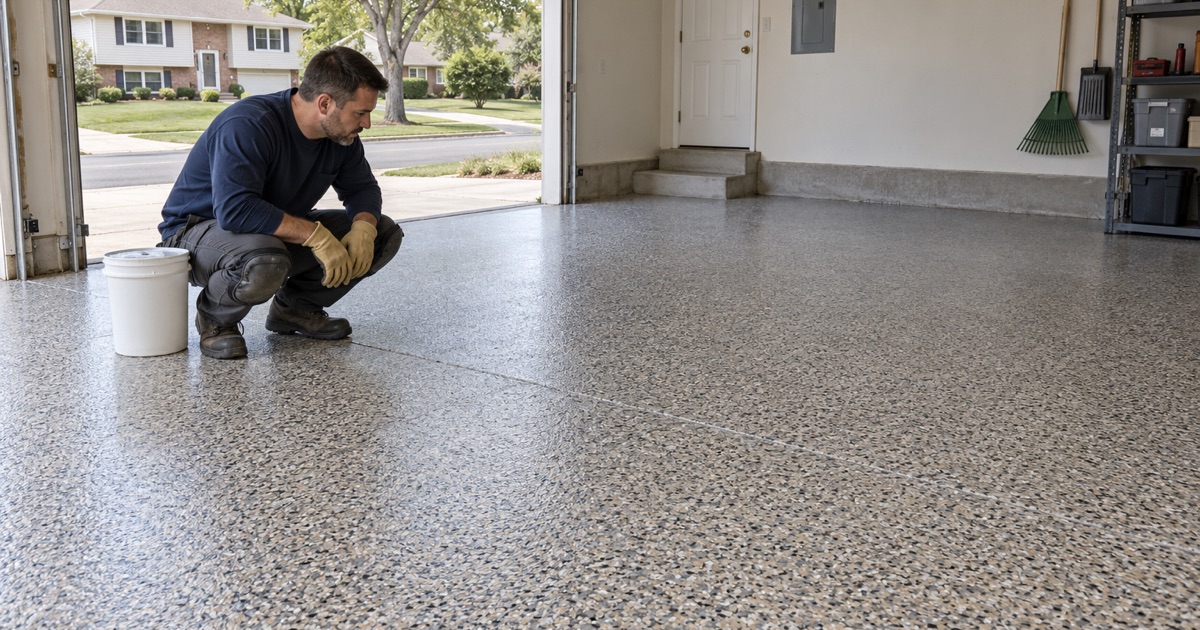
A flake floor starts with a pigmented base coat. While that coat is still wet, colored vinyl chips are broadcast across it, usually until the base is fully covered. After the base cures, the loose chips are removed and the floor is sealed with a clear topcoat, leaving a textured, speckled surface that looks like stone and wears like armor.
The look is in the blend you choose. The performance is in the work underneath it, which is why every flake floor we install starts with diamond grinding, crack repair and moisture testing, and why our proposal states the products, the layers and the finished thickness.
How a Flake Epoxy Floor Is Built
Diamond-Ground Concrete
Every flake floor begins with a slab that has been diamond ground to an open, consistent profile. Grinding removes the smooth trowel finish, sealers and any old coatings, giving the primer and base coat sound concrete to bond to. We repair cracks and spalls at this stage, filling stable cracks with a semi-rigid polyurea so they disappear under the broadcast.
Base Coat and Broadcast
The base coat, usually a 100% solids epoxy or a polyaspartic, is tinted to complement the flake blend. While it is wet, we broadcast the chips by hand in a steady, even pattern.
For most garages and basements, we broadcast to rejection, which means adding flake until the base cannot hold any more. That full coverage adds thickness and texture and hides minor flaws in the slab.
Scrape, Vacuum and Topcoat
Once the base cures, we scrape off loose and standing chips, vacuum the floor and apply a clear topcoat. The scraping step knocks down sharp edges so the finished floor feels smooth enough to walk on barefoot while keeping a slight texture for grip. The topcoat, usually a polyaspartic or polyurea, protects the chips from abrasion, chemicals and sunlight.
Choosing Flake Blends and Sizes
Color Blends
Flake comes in many blends, from grays and tans that suit most garages to bold mixes of blues, reds or greens for game rooms and showrooms. Multi-color blends hide dust and tire marks much better than single colors. We bring sample boards so you can see each blend in your own lighting, which can make a big difference compared with photos online.
Chip Sizes
Flake sizes range from small chips that blend into a granite look to large chips that read as distinct speckles. Small and medium chips are most common in garages because they look uniform and hide wear. Larger chips give a bolder, more decorative effect that suits basements and commercial spaces.
Partial or Full Broadcast
A partial broadcast scatters chips over a colored base, letting the base color show through. It uses less flake and gives a lighter, more open look, but it has less texture and shows wear sooner. A full broadcast is our standard for garages and high-traffic areas because it adds more protection and grip.
Why Flake Works So Well in Local Garages
Salt, Brine and Winter Slush
In winter, cars bring in slush loaded with rock salt and calcium chloride brine. On bare concrete, that salt soaks in and contributes to scaling as it freezes and thaws.
A sealed flake floor keeps that brine on top of the coating, where it can be squeegeed out the door. The texture of the flake also gives better footing than a smooth coating when the floor is wet.
Hot Tires and Heavy Use
In summer, hot tires can soften and lift thin coatings. A full flake system, built with a solid base coat and a tough topcoat over a ground slab, resists that hot tire pickup and the scuffing from jacks, tool chests and bikes.
Hiding Imperfections
Older garage slabs around Crystal Lake often show patches, cracks and scaling. Flake hides cosmetic flaws far better than solid color or metallic finishes, so an older slab can still end up looking uniform once it has been ground and repaired.
Flake Floors Beyond the Garage
Basements and Laundry Rooms
Flake floors work well in basements, laundry rooms and mudrooms, giving a clean, seamless surface that hides dirt and wipes up easily. Basement slabs are tested for moisture first, and a mitigation primer is added where the readings call for one, since a coating is not waterproofing.
Workshops and Home Gyms
Workshops and home gyms benefit from the toughness and texture of a flake floor. It handles dropped tools, rolling equipment and rubber mats while staying easy to sweep and mop.
Commercial Break Rooms and Locker Rooms
In commercial buildings, flake floors are popular in break rooms, locker rooms, restrooms and offices. They give a finished look, resist stains and can be built with added texture where floors get wet.
Caring for a Flake Floor
Everyday Cleaning
Sweep or dust mop to remove grit, and mop with a pH-neutral cleaner. In winter, push slush and brine out of the garage before it dries into a salty crust.
Protecting the Topcoat
Use pads under jack stands and heavy equipment, and clean up oil and chemicals promptly. When the topcoat eventually wears in traffic lanes, it can be scuffed and recoated without removing the flake layer.
- 20+ Years on Local Concrete
- Moisture Testing in Every Scope
- Written Per-Square-Foot Quotes