Crystal Lake Epoxy Flooring pours metallic epoxy floors in Crystal Lake, IL, serving surrounding cities including Lakewood, Lake in the Hills, Cary, Algonquin and Fox River Grove. In more than 20 years of floor work, metallic systems are the ones where preparation and craft show most clearly, because every flaw in the slab or the pour ends up on display.
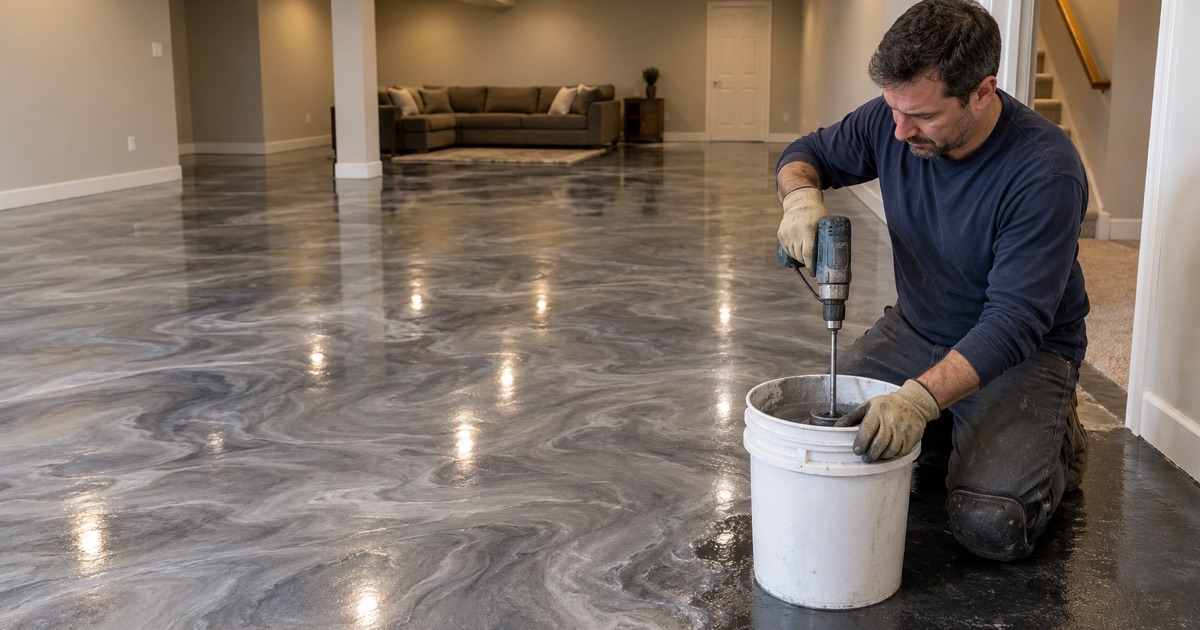
A metallic epoxy floor uses fine metallic pigments suspended in a clear or tinted epoxy. As the coating is rolled, troweled and worked, the pigments drift, swirl and settle, leaving a marbled, almost liquid look with depth that changes as you walk across the room. No two floors come out the same, which is the appeal.
We pour metallic floors over a diamond-ground, repaired and moisture-tested slab, and our proposal names the products, the layers and the finished thickness. It also explains the honest tradeoffs, including where a metallic finish wears better than other options and where it does not.
How a Metallic Epoxy Floor Is Built
A Flat, Ground and Repaired Slab
Metallic finishes magnify whatever is under them. Grinding marks, patches and dips that would disappear under flake become visible under a smooth, reflective coating, so preparation for a metallic floor goes further than for most systems.
We diamond grind the slab to an even profile, fill cracks and pits, and grind repairs flush. Where a floor is out of level, we may add a self-leveling layer so the metallic coat flows evenly.
Primer and Base Color
A primer goes down first to seal the concrete and stop air from bubbling up through the coating. A tinted base coat follows, usually dark, which gives the metallic layer depth and helps the pigments show their movement. The base color has a big effect on the final look, so we confirm it with you on samples before the day of the pour.
The Metallic Coat and Topcoat
The metallic layer is mixed and poured in one continuous session so the whole floor ages and cures together. Crews spread and manipulate it with rollers, trowels and sometimes solvent sprays to create veining, cells or soft clouds of color.
Once it cures, a clear topcoat protects the effect. We often use a polyaspartic or polyurethane topcoat for scratch resistance and color stability under sunlight.
Where Metallic Epoxy Works Best
Finished Basements and Family Rooms
In a finished basement, a metallic floor replaces carpet or laminate with a seamless, easy-clean surface that becomes a design feature. It works well in rec rooms, home theaters and bars.
Basements come with moisture risk, though. We test the slab first, and if readings are high, we add a moisture-mitigation primer or recommend another option. A coating is not waterproofing, and a metallic finish blistering from below is especially visible.
Showrooms, Salons and Offices
Commercial spaces use metallic epoxy to make a strong first impression. Showrooms, salons, offices and restaurants get a floor that looks custom and photographs well, with a seamless surface that is simple to clean. We schedule commercial pours around business hours, often over a weekend, since the metallic layer needs a continuous session and time to cure.
Where We Suggest Something Else
A metallic floor is not the best choice everywhere. In garages that see winter brine, grit and hot tires, a flake broadcast hides wear far better. In heavy industrial spaces, a quartz or solid-color system holds up with less visible scuffing. We would rather steer you to the finish that fits the room than install a metallic floor that will look tired after one hard season.
Colors, Effects and Finishes
Choosing Pigments and Base Colors
Metallic pigments come in many shades, from silvers, pewters and charcoals to coppers, golds, blues and greens. Combining two or three pigments over a contrasting base creates richer movement. Neutral palettes suit offices and living spaces, while bolder combinations suit bars, salons and showrooms where the floor is part of the brand.
Movement and Pattern Styles
The same materials can produce very different looks depending on technique. Long sweeping strokes create a flowing, river-like pattern, while solvent sprays create small cells and lunar textures. Lighter handling produces soft clouds of color. We show examples of each style and agree on the general direction before the pour, knowing the exact pattern will be unique to your floor.
Gloss, Satin and Texture
Most metallic floors are finished in high gloss to show off the depth. A satin topcoat softens reflections and hides fine scratches better. For kitchens, bars and entries, we can add a fine slip-resistant additive to the topcoat, trading a little smoothness for better grip when the floor is wet.
Practical Questions Before You Choose Metallic
Temperature, Dew Point and Timing
Epoxy flows and cures differently with temperature, and metallic layers are especially sensitive. A cold slab can leave the finish cloudy, and a slab close to dew point can cause amine blush that dulls the topcoat. We measure slab temperature and dew point spread before scheduling the pour, and in unheated spaces we wait for the right conditions rather than forcing the job.
Pricing a Metallic Floor
Metallic floors cost more per square foot than standard flake systems because they take more preparation, more material and more skilled labor. We quote per square foot for the system we propose, including any leveling, crack repair or moisture primer the slab needs.
The proposal also lists the warranty exclusions, with moisture named first, and the cure schedule before furniture or traffic can return. Seeing those details in writing ahead of time lets you compare our quote fairly against others, instead of comparing a single price for what may be two very different floors.
Living With the Finish
A metallic floor rewards a little care. Felt pads under chairs, mats at doorways and regular dust mopping keep the gloss sharp, and a worn topcoat can be renewed years later without touching the metallic layer beneath it.
- 20+ Years on Local Concrete
- Moisture Testing in Every Scope
- Written Per-Square-Foot Quotes