
Crystal Lake Epoxy Flooring installs commercial epoxy flooring in Crystal Lake, IL, serving surrounding cities including Lakewood, Lake in the Hills, Cary, Algonquin and Fox River Grove. For more than 20 years we have coated shop floors, showrooms, offices and plant floors, and we have learned that a commercial floor succeeds or fails on two things: the right system for the use, and a schedule that lets the business keep running.
Commercial floors take more punishment than residential ones. They see forklifts and carts, chemicals and cleaners, heavy equipment, and constant foot traffic, often all at once. A coating that would last for years in a home garage can wear through in months in the wrong commercial setting, so we start every job by asking how the floor is actually used.
Our proposals name the product, the system build and the finished thickness, priced per square foot. They also show the schedule, the phasing plan and the paperwork the address requires, because the floor is only one part of a commercial job.
Commercial Floor Systems We Install
Poured and High-Build Epoxy Systems
Self-leveling epoxy is poured and spread to a smooth, flat finish, often at a thicker build than a rolled coating. It suits light manufacturing, labs, showrooms and warehouses where a seamless, easy-clean surface matters.
High-build epoxy systems add thickness for impact and abrasion resistance. Both can be finished with a chemical-resistant topcoat that stands up to the cleaners and fluids the business uses every day.
Quartz and Flake Broadcast Systems
Broadcast systems embed quartz aggregate or vinyl flake into layers of epoxy, then seal them with a clear topcoat. Quartz adds slip resistance and toughness, which makes it a common choice for locker rooms, ramps, kitchens and wet production areas. Flake systems are popular in offices, break rooms and retail spaces because they hide dirt and wear while giving a finished, decorative look.
Urethane Cement for Heat and Washdown
Where floors see hot water, steam cleaning, fryer oil or thermal shock, standard epoxy can soften or debond. Urethane cement handles those conditions much better and can be installed as a thick mortar, with integral coved bases that run up the wall. It is our go-to system for commercial kitchens, food processing and other wet, hot environments.
Spaces We Coat
Shops, Plants and Warehouses
Manufacturing and distribution are a big part of the local economy, with tool, equipment and packaging operations along Route 14, Route 31 and Route 176. Those floors see forklifts, pallets, oils and coolants, and they need thick, chemical-resistant systems with filled joints.
We fill control joints with a semi-rigid polyurea so wheels roll smoothly, and we can add safety lanes, hazard zones and pedestrian walkways in coated colors that last far longer than tape.
Showrooms, Offices and Retail
Customer-facing spaces need floors that look sharp and stay that way. Decorative flake, metallic and solid-color systems give a seamless, polished appearance that is easy to clean and resists the scuffs left by shoes, carts and display fixtures. For tenant turnovers, we can remove old flooring, prepare the slab and install a new system on a tight timeline so the next occupant opens on schedule.
Auto Service and Fleet Bays
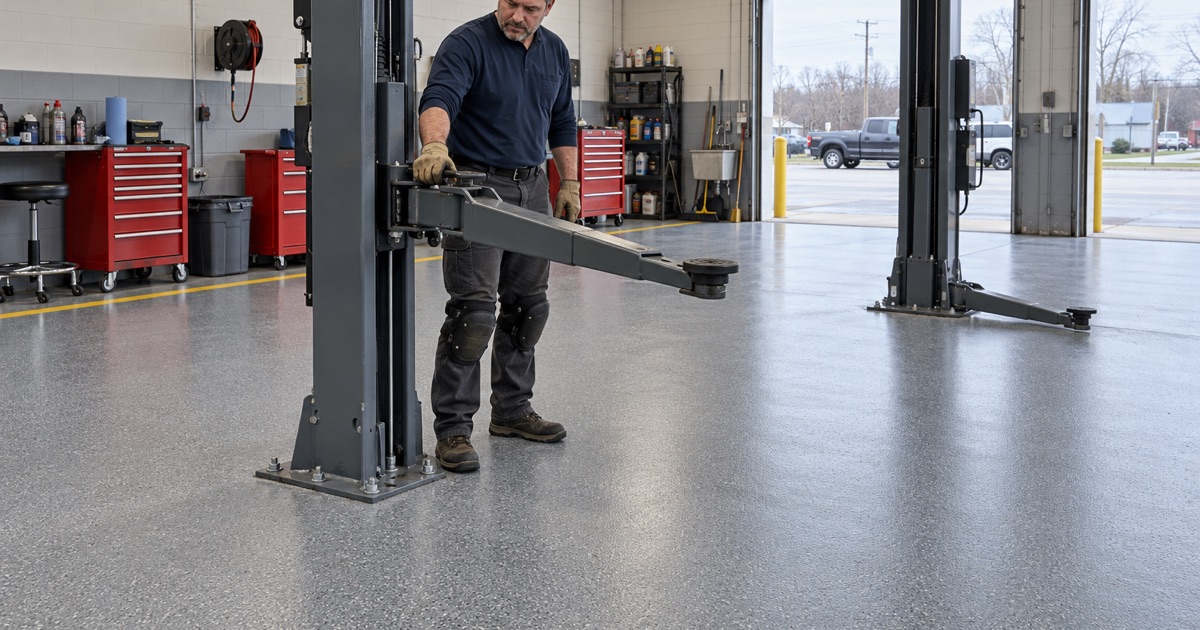
Service bays and fleet garages need floors that resist oil, coolant, brake fluid and hot tires, and that hold up around lifts and trench drains. We build them thick, with a chemical-resistant topcoat and added texture where fluids make the floor slick. In winter those bays also see brine dripping off vehicles, so the system is chosen to keep salt water on top where it can be squeegeed to the drain.
Scheduling Around Your Operations
Phasing Large Floors
Very few businesses can close completely for a floor project. We split large floors into phases so part of the building stays in use, and we plan the sequence with managers to keep traffic and deliveries moving.
Night and Weekend Installation
When the work cannot happen during business hours, we schedule overnight shifts and weekends. Fast-curing primers and topcoats help shorten downtime, but the phasing plan is what keeps a business open.
Ventilation and Odor Control
Coating in an occupied building means managing odors. We ventilate work areas, seal off adjacent spaces and time the most odorous steps for when the building is empty.
Rules That Shape a Commercial Floor
Illinois VOC Limits
Crystal Lake is part of the Chicago 2015 ozone nonattainment area, and Illinois limits the VOC content of floor and industrial maintenance coatings statewide. Those limits bind the installer as well as the manufacturer, so we choose compliant products for every commercial job.
Local Jurisdiction and Plan Review
A Crystal Lake mailing address does not always mean the City of Crystal Lake governs the building. Some industrial addresses on Route 31 and Route 176 sit in Prairie Grove or unincorporated Nunda Township. We confirm which building department applies to the parcel before quoting a schedule.
Restaurants and food businesses also go through plan review with the McHenry County Department of Health, so we specify kitchen floors to meet that review before the permit is issued.
Moisture Testing on Commercial Slabs
Commercial slabs can carry moisture too, especially older floors poured without a vapor retarder or slabs on grade near water. We test moisture as part of every scope and specify a mitigation primer where the readings call for one, rather than finding out after the coating blisters across a sales floor.
- 20+ Years on Local Concrete
- Moisture Testing in Every Scope
- Written Per-Square-Foot Quotes